PDF Reader Tools
- 4.0
- Rating
- 500.00K
- Installs
- Free
- Price
 Analysis by App-foxy
Opening a document on a phone should be a small task, but it often becomes a chain of interruptions: finding the right file, waiting for an unsuitable app, dealing with a cluttered interface, and losing time before the document is even readable. That is the problem PDF Reader is trying to remove. It is a free tools app from Popientip Yia, built around the straightforward job of opening and reading documents on Android.
I approached PDF Reader as a practical utility rather than something I would keep open for entertainment. Its appeal is easy to understand: when I receive a PDF in a message, download one from a website, or need to check a document stored on my phone, I want a direct reading experience instead of a complicated document-management system. The app’s store summary describes it as an all-in-one document reader, while its short description focuses on PDF reading. That combination gives a good idea of its role: a general document doorway, with PDF files at the center.
The app is free and rated for Everyone, which makes it approachable for shared devices, students, workers, and casual users. It has reached over one hundred thousand installs and holds a 3.7 average from more than three hundred ratings, with dozens of written reviews. Those figures suggest a useful but not universally loved tool, so I would not treat it as a flawless replacement for every established reader. I see it more as a focused option for people who want a simple way to get into their documents without committing to a larger office suite.
You May Also Like

 Blood Strike: 2.5 Anniversary
Blood Strike’s Loadouts Turn Every Drop Into a Tactical Gamble
A close look at Blood Strike’s custom loadouts: how fast access to signature weapons reshapes its battle royale rhythm, rewards preparation, and narrows the gap between fights.

 Pandora - Music & Podcasts
Pandora’s Music Is Easy to Start, but Harder to Recover
Pandora’s strength is its low-effort path from a seed to a station. Its weak spot is how much confidence it asks you to place in connection, setup, and quiet recovery.

 8 Ball Pool
 Is Built on Rivalries, Rematches, and Routine
A close look at the rivalries, rematches, shared routines, and unanswered safety questions that turn a quick pool match into a persistent mobile community.

 Samsung Music
’s Quiet Strength Is Playing What You Already Own
Its reach comes less from spectacle than from dependable access to a personal library. That simplicity is both the app’s strongest retention engine and its ceiling.

 AccuWeather: Weather Radar
AccuWeather Review: A Quick, Clear Forecast for Everyday Decisions
For everyday plans, the best forecast is the one you can understand quickly. AccuWeather makes rain timing, radar, and local conditions easy to act on, with a few trade-offs.

 Hill Climb Racing
Why Hill Climb Racing Still Turns Crashes Into One More Run
A tiny car, a bumpy hill and one more upgrade: Hill Climb Racing keeps resurfacing because its simple chaos makes every near-miss feel personal.
More From Our News Desk



Getting from a downloaded file to a readable page
The first useful setup is not about customizing every detail. It is about making the app part of the normal file-opening routine. After installing it, I would begin with a document that already exists on the phone rather than trying to judge it with an empty library. A recent bill, school handout, travel confirmation, or work attachment is a better test because it shows whether the app fits the way I actually receive files.
When several reader apps are installed, the operating system may ask which one should open a PDF. That moment matters more than it sounds. If PDF Reader is the app I prefer for quick checks, choosing it consistently can remove a repeated decision from my day. If I regularly need editing, signing, cloud collaboration, or heavy annotation, I would avoid making it the permanent default until I know that its reading workflow covers my needs.
The minimum operating system is Android 8.0, so compatibility is reasonably broad for people using older Android phones. The current version is 1.0.16, which is useful context when judging the app: it is a relatively focused tool rather than a mature office platform with a long list of specialized modules. I would keep expectations aligned with that role. A reader can be valuable precisely because it does not try to become a complete productivity suite.
One practical habit makes a noticeable difference with any document reader: test the files you use most often, not just a one-page text PDF. Open a document with several pages, one with small print, and one containing tables or images. A reader that feels fine with a simple page may be less comfortable when the layout becomes dense. This quick test also tells me whether I should use the app for routine viewing only or rely on another tool for more demanding documents.
I also recommend checking how the app fits into the phone’s existing file workflow. A document reader is most useful when it can be reached from the place where the file arrives, whether that is a download folder or another app’s share and open commands. The time-saving benefit comes from reducing the distance between “I received this document” and “I can read it.” If the app forces me to search manually every time, its central advantage becomes much smaller.
A useful role for a lightweight reader
PDF Reader makes the most sense when the task is reading rather than producing. I would choose it for opening reference material, checking a form before filling it elsewhere, reviewing a receipt, or looking through a manual while away from a computer. These are short, repeatable jobs where speed and low friction matter more than advanced document control.
That distinction is important because many people install a PDF app expecting it to handle every document-related task. Reading, editing, converting, signing, scanning, and organizing are separate jobs. A compact reader may be the right answer for the first one while being a poor answer for the others. I would not judge it harshly for avoiding features I do not need, but I would also not recommend it as the only document tool for someone whose work depends on editing or formal review.
Everyday situations where it saves time
Consider a common travel situation. I receive a booking confirmation or a ticket as a PDF shortly before leaving home. I do not need to rewrite it, annotate it, or place it into a project folder. I need to open it quickly, enlarge the relevant information, and close it again. A dedicated reader is useful here because it keeps the task centered on viewing instead of presenting a full office workspace.
The same applies to a school handout. A student may download reading material, open it between classes, and return to it later. For that use, the important questions are simple: can the file be reached easily, does the page remain readable on a small screen, and can the user get back to the document without unnecessary steps? PDF Reader is aimed at this kind of repeated access, where the phone is a convenient reading surface rather than a replacement for a laptop.
At work, I would use it for quick checks rather than final document handling. Suppose a colleague sends a PDF report while I am away from my desk. I can inspect the figures, confirm the page I need, and decide whether a fuller review can wait. That can prevent a small question from becoming a delayed task. However, I would move to a more specialized application if I needed tracked changes, signatures, comments shared with a team, or reliable editing of the original file.
Another useful scenario is household administration. Receipts, warranty documents, school notices, and service instructions tend to arrive as individual files and then disappear among downloads. A reader does not solve the organization problem by itself, but it can make the first step faster: open the file, confirm what it is, and decide whether to keep, share, or delete it. That small reduction in hesitation is where a simple utility earns its place.
For people who read manuals, the trade-off is more noticeable. A phone reader is convenient when I need one instruction while standing beside an appliance or vehicle. It is less comfortable for long sessions with technical material, especially when pages contain diagrams, columns, or tiny labels. In those cases, a tablet, computer, or a more feature-rich reader may be a better choice. The app is most convincing as an on-demand tool, not necessarily as my main reading environment for every document.
Three habits that improve the experience
First, I would keep the app for triage. Open incoming files with it to decide what deserves deeper attention. This avoids loading a full office suite for a document that only needs a quick glance. It also separates reading from editing, which reduces the chance of accidentally changing a file when I only meant to inspect it.
Second, I would use file naming and folders alongside the reader. A document app can open a file, but it cannot replace a sensible storage routine. After reviewing an important PDF, I would place it in a recognizable folder or rename it through the phone’s file manager if needed. That workflow prevents the common mistake of assuming that opening a file once means it will be easy to find again.
Third, I would compare the app with the document’s source before making it the default. If most files arrive through a service that already includes a strong viewer, the extra app may not save much time. If files come from many different places, a dedicated reader can be more convenient because it gives those documents a consistent destination. The value depends less on the number of features than on how often I encounter PDFs outside a single ecosystem.
These habits reveal a subtle strength and a limitation at the same time. A focused reader can reduce the number of steps in a small task, but it does not automatically create a complete document workflow. Users who understand that boundary are more likely to enjoy it. Users expecting one installation to replace a file manager, office suite, scanner, editor, and signing tool may find the experience incomplete.
Where the friction is reduced—and where it remains
The main friction PDF Reader addresses is the gap between having a document and being able to read it. A dedicated tool is easier to justify when I frequently open PDFs from different sources and want a familiar reading route. Its free price also lowers the cost of trying it, so I can test it with real files without first making a financial commitment.
There is still friction around the broader document process. Reading is only one stage. If I need to fill in fields, add a signature, extract content, convert a file, or collaborate with another person, I may have to leave the app. That change of tool is not necessarily a failure, but it adds time and can create confusion about which version of a document is current.
The 3.7 average rating is a useful reminder to keep the recommendation measured. It indicates that the app has found an audience, but it also suggests that the experience may not satisfy every Android user. I would be especially careful before relying on it as the sole reader for urgent work documents. For routine personal viewing, the risk is smaller because another reader can remain available as a backup.
I also would not confuse “all-in-one document reader” with “all-in-one document editor.” The wording points to broad reading coverage, not necessarily a complete set of professional controls. Someone comparing it with a large office suite should compare the actual job they need done. If the job is opening PDFs, a smaller tool may feel cleaner. If the job involves changing content or managing a team’s files, the larger alternative is likely the better fit.
People who already use a browser or messaging app with a built-in PDF viewer may not notice a dramatic improvement. In that case, the extra installation only makes sense if it offers a more dependable or comfortable route for repeated reading. Likewise, users who spend hours reading long academic or technical PDFs may prefer an application designed around advanced navigation and study features. PDF Reader is better suited to practical access than intensive document research.
Who should install it?
I would recommend trying PDF Reader if you often receive PDFs on an Android phone and want a free, uncomplicated reading option. It is a sensible candidate for students checking handouts, families opening forms and receipts, travelers viewing confirmations, and workers who need quick access to reference documents away from a desk. The Everyone age rating also makes it a broadly approachable choice for ordinary household use.
I would skip it as a primary solution if my essential workflow involves editing, signing, converting, detailed annotation, or shared document review. In those situations, I would choose a specialized PDF editor or an office application, even if that meant accepting a busier interface. I would also look elsewhere if I needed a highly refined long-form reading experience for complex technical documents.
My final view is practical rather than enthusiastic for its own sake. PDF Reader removes a recurring inconvenience: opening a PDF on a phone without turning the task into a larger project. It is free, compatible with Android 8.0 and later, and developed by Popientip Yia. Its current 1.0.16 release and moderate user reception make it worth testing, but not something I would install blindly as my only document tool.
My recommendation is to use it as a quick-access PDF reader, not as a complete office replacement. If that matches your daily need, it can save small amounts of time repeatedly, which is exactly how a good utility proves its value. If your documents demand serious editing or collaboration, keep looking for a tool built around those jobs instead.
FAQs for PDF Reader Tools
01What are the key features of PDF Reader Tools?
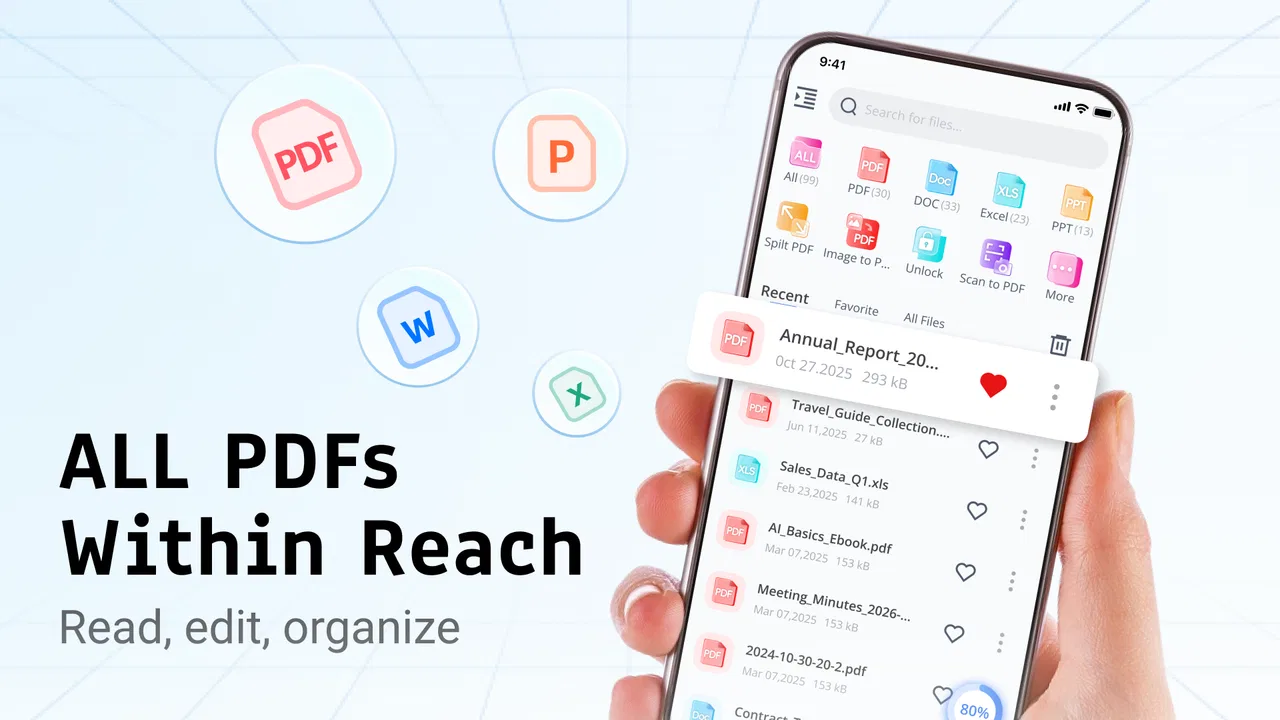
PDF Reader Tools offers a comprehensive suite of features including annotation tools, text highlighting, and the ability to fill out forms. It also supports various cloud services for easy file access and offers a user-friendly interface for smooth navigation. Additionally, it includes options for converting PDFs to other formats and vice versa.
02Is PDF Reader Tools available for both Android and iOS devices?
Yes, PDF Reader Tools is available for download on both Android and iOS platforms. This ensures that users across different devices can enjoy its full range of features and functionalities, making it a versatile choice for managing PDF files on the go.
03Does PDF Reader Tools support cloud storage integration?
Indeed, PDF Reader Tools seamlessly integrates with popular cloud storage services such as Google Drive, Dropbox, and OneDrive. This feature allows users to easily access and manage their PDF files from anywhere, ensuring that their documents are always up-to-date and accessible across devices.
04Are there any in-app purchases or subscription fees in PDF Reader Tools?
While the basic version of PDF Reader Tools is free to download, it offers in-app purchases for premium features. These may include advanced editing tools, additional storage options, and ad-free usage. Users can choose to subscribe monthly or annually depending on their needs.
05How user-friendly is the interface of PDF Reader Tools?
PDF Reader Tools is designed with a clean and intuitive interface, making it easy for users of all experience levels to navigate. The app features simple menus, clear icons, and quick access to essential tools, ensuring that even first-time users can easily manage and edit their PDF files.
Pros
- Intuitive user interface for easy navigation.
- Supports a wide range of PDF formats.
- Allows annotations and notes on documents.
- Quickly converts PDFs to other formats.
- Offline access to saved documents.
Cons
- Occasional ads can interrupt workflow.
- Limited free version features.
- Requires account for cloud syncing.
- May lag with very large files.
- Some tools are hard to find initially.

PDF Reader Tools
Gallery